Car Loan Calculator: Plan Your Car Financing with Confidence
Buying a car is one of the biggest financial decisions most people make. Whether you’re purchasing your first vehicle, upgrading to a family SUV, or investing in your dream car, understanding the true cost of financing is essential. This is where a Car Loan Calculator becomes one of the most valuable tools available.
Many buyers focus only on the monthly payment, but a car loan involves much more than that. Interest rates, loan terms, down payments, taxes, and additional fees all affect how much you’ll actually pay over time. A car loan calculator helps you see the complete financial picture before signing any agreement.
If you’re planning to finance a new or used vehicle anywhere in the world, this guide explains how a car loan calculator works, why it’s important, common mistakes buyers make, and practical tips to help you secure a loan that fits your budget.
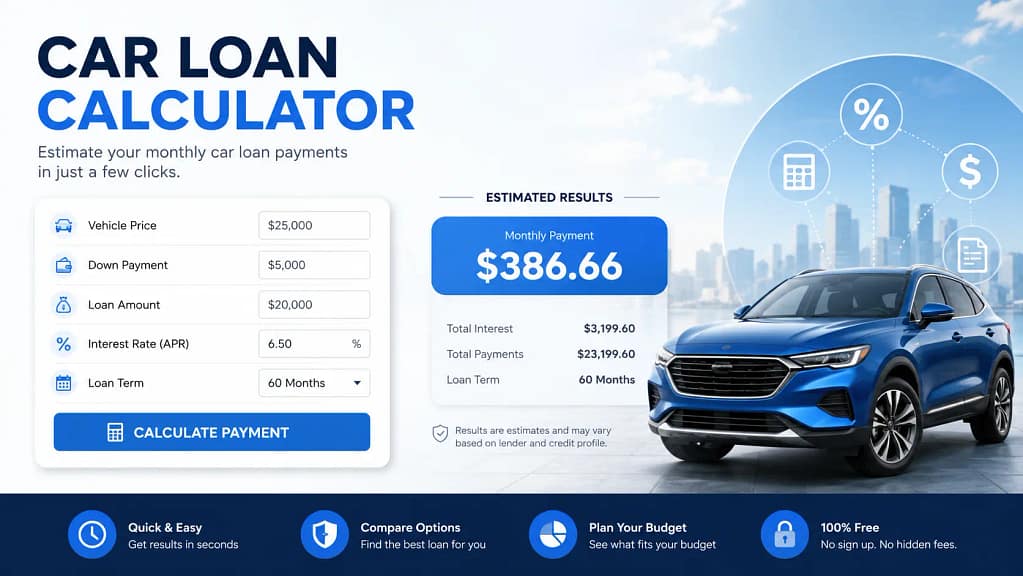
What Is a Car Loan Calculator?
A Car Loan Calculator is an online financial tool designed to estimate your monthly loan payments based on the information you provide. Instead of manually calculating interest and repayments, the calculator instantly generates an estimate using your loan details.
Typically, you’ll need to enter:
- Vehicle purchase price
- Down payment amount
- Loan amount
- Annual interest rate
- Loan repayment period (months or years)
Within seconds, the calculator estimates:
- Monthly payment
- Total interest paid
- Total amount repaid over the loan term
These estimates make it easier to compare financing options before applying for a loan.
Why Every Car Buyer Should Use a Car Loan Calculator
Many buyers start shopping for a vehicle before knowing how much they can realistically afford. This often leads to purchasing a car that stretches their budget.
A Car Loan Calculator helps you avoid that mistake by showing how different loan terms affect your monthly payment.
Some of the biggest benefits include:
Better Budget Planning
Knowing your estimated monthly payment helps you determine whether the loan fits comfortably within your monthly income.
Compare Financing Options
Interest rates vary between banks, credit unions, dealerships, and online lenders. A calculator allows you to compare different financing offers before making a decision.
Understand the Total Cost
A lower monthly payment doesn’t always mean a better loan. Longer repayment periods usually result in paying much more interest over time.
Save Time
Instead of calculating repayments manually, you receive accurate estimates in seconds.
Car Finance Calculator vs. Car Loan Calculator
Many people use the terms Car Finance Calculator and Car Loan Calculator interchangeably.
In most cases, both tools calculate:
- Monthly repayments
- Loan interest
- Total repayment amount
Some lenders may also include registration fees, insurance, taxes, or dealer charges within a Car Finance Calculator, making the estimate slightly more comprehensive.
Regardless of the name, both calculators help buyers understand the financial commitment before applying for financing.
Using a Car Finance Quote Before Applying
A Car Finance Quote provides an estimate from a lender based on your financial profile and loan requirements.
A typical quote includes:
- Loan amount
- Interest rate
- Repayment term
- Estimated monthly payment
- Total repayment cost
Before accepting any offer, compare quotes from multiple lenders. Even a small difference in interest rates can save hundreds or even thousands of dollars over the life of the loan.
Using a Finance Calculator Car Loan alongside different finance quotes makes comparing offers much easier.
Buying a New Car? Use a New Car Finance Calculator
A New Car Finance Calculator is useful when purchasing a brand-new vehicle.
New cars often qualify for promotional financing or lower interest rates offered by manufacturers and banks.
Before visiting a dealership, calculate different loan scenarios by changing:
- Down payment amount
- Loan duration
- Interest rate
This helps you understand how each factor affects your monthly payment and total borrowing cost.
Planning to Buy a Used Vehicle?
A Used Car Finance Calculator is equally important for buyers considering second-hand vehicles.
Used cars often have:
- Different interest rates
- Shorter loan terms
- Higher financing costs depending on the lender
Calculating repayments beforehand helps you determine whether the purchase remains affordable throughout the loan period.
Estimating Monthly Payments with a Car Finance Payment Calculator
A Car Finance Payment Calculator focuses primarily on your expected monthly installment.
It’s especially useful if you’re asking questions like:
- Can I afford this vehicle?
- What happens if I increase my down payment?
- How much interest will I save with a shorter loan?
- Should I choose a 48-month or 60-month loan?
By adjusting the numbers, you can create a repayment plan that fits comfortably within your financial goals.
Standard Bank Car Finance Calculator
If you’re financing through Standard Bank or another major financial institution, using their Standard Bank Car Finance Calculator can provide a realistic estimate based on their lending structure.
Remember that every calculator provides an estimate. Your actual loan approval depends on several factors, including:
- Credit history
- Income
- Employment status
- Debt-to-income ratio
- Final interest rate offered by the lender
Common Mistakes Car Buyers Make
Many people make expensive mistakes because they focus only on owning the vehicle rather than understanding the financing agreement.
Here are some of the most common mistakes buyers make around the world.
Choosing a Car Based Only on Monthly Payments
One of the biggest mistakes is looking only at the monthly installment.
A dealer may reduce your monthly payment simply by extending the loan term from four years to seven years.
Although the payment appears lower, you’ll usually pay much more interest over time.
Always compare the total repayment amount, not just the monthly payment.
Ignoring the Interest Rate
Even a small increase in interest rate can significantly increase the total cost of the loan.
For example, a difference between 5% and 8% interest can result in thousands of dollars in additional payments over several years.
Always compare interest rates from multiple lenders before making your decision.
Making a Small or No Down Payment
While financing 100% of the vehicle may sound attractive, it usually increases:
- Monthly payments
- Total interest
- Overall loan cost
Whenever possible, making a larger down payment reduces the amount you need to borrow and lowers your monthly repayments.
Borrowing More Than You Can Comfortably Afford
Many buyers qualify for larger loans than they actually need.
Just because a lender approves a higher amount doesn’t mean it’s the right financial decision.
Choose a payment that leaves room in your monthly budget for emergencies, savings, insurance, fuel, and maintenance.
Forgetting Additional Ownership Costs
Many first-time buyers calculate only the loan payment and overlook ongoing expenses such as:
- Vehicle insurance
- Registration fees
- Fuel
- Routine servicing
- Repairs
- Tire replacements
- Parking costs
These expenses should always be included when planning your budget.
Not Comparing Multiple Lenders
Accepting the first financing offer is another common mistake.
Banks, online lenders, credit unions, and dealerships often offer different:
- Interest rates
- Processing fees
- Loan terms
- Early repayment conditions
Comparing several offers could save a significant amount over the life of your loan.
Things to Consider Before Applying for a Car Loan
A little preparation before applying can improve your chances of getting a better loan.
Check Your Credit Score
In many countries, lenders use your credit history to determine loan eligibility and interest rates.
A better credit score often means lower borrowing costs.
Decide on a Comfortable Budget
Instead of asking, “How much can I borrow?”
Ask yourself:
“How much can I comfortably repay every month without affecting my daily finances?”
This approach helps prevent financial stress later.
Understand the Loan Terms
Read the loan agreement carefully.
Pay attention to:
- Interest rate
- Loan duration
- Processing fees
- Late payment charges
- Early repayment penalties
Knowing these details helps you avoid unexpected costs.
Use a Car Loan Calculator More Than Once
Don’t rely on a single calculation.
Try different scenarios by changing:
- Down payment
- Loan period
- Interest rate
This allows you to find the most affordable financing option before applying.
Final Thoughts
A Car Loan Calculator is much more than a simple payment estimator—it’s a financial planning tool that helps buyers make informed decisions before committing to a vehicle loan. Whether you’re comparing lenders, reviewing a Car Finance Quote, using a Finance Calculator Car Loan, or estimating repayments with a Used Car Finance Calculator, New Car Finance Calculator, Car Finance Payment Calculator, or Standard Bank Car Finance Calculator, understanding your borrowing costs in advance can save money and reduce financial stress.
The smartest car buyers don’t choose a loan based solely on the lowest monthly payment. They compare interest rates, evaluate the total repayment amount, budget for ongoing ownership costs, and use a car loan calculator to explore different financing scenarios. Taking these steps before signing a loan agreement helps ensure that your new vehicle remains a source of convenience—not financial pressure.
By planning carefully and borrowing responsibly, you can enjoy your new car with confidence while keeping your finances on track.